Reading Tea Leaves Part II: Hollywood or Bust
- Erika Andresen
- Jul 21, 2025
- 3 min read

Seismic shifts happen in various industries, even without tariffs entering the chat. It takes some expertise and reading tea leaves, but when you see trends you need to pay attention to, how you act on that information will put you ahead of the curve, on the curve, or behind the curve (if you can even do that).
Yes, folks, this is business continuity, but on a grand scale. I've previously written about this for the California wine industry (a year before CNN talked about it!). We're sticking with California by doing a case study of Hollywood.
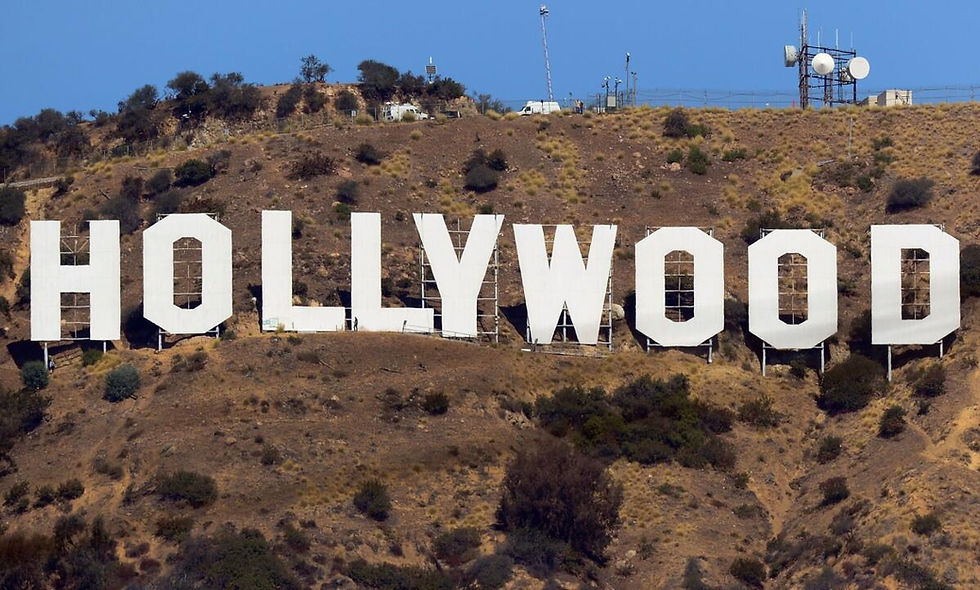
Hollywood's bad luck came in the form of a flock of Black Swans and Gray Rhinos. Various strikes, Covid, the Los Angeles fires, the rise and crash of streaming, tax credits in other countries and states, and AI. By all accounts of those in the industry, Hollywood as we knew it is dead. What used to be, ain't no more. Rob Lowe, the famous actor, recently said "I don't think Hollywood the industry has much to do with Hollywood the place anymore." Ouch.
Cost efficiency is the main goal of making films and shows and has been even before streaming platforms jumped into production. Studios and production companies are publicly traded so they have shareholders they have to answer to, which means being forced to look outside of Los Angeles. Also, California's union protections are very high so the cost of labor is higher there than other states with less protections...which translates into an incentive to go elsewhere.
It's hard for the local below-the-line talent pool (the crew that gets the movies made, not the actors) to find work in California as a result or even plan their lives with little to no predictability. Why would this matter for business continuity? If it's not concentrated in Hollywood anymore, that skill and knowledge is not being passed down. The talent is being put out to pasture with the experience.
Even big name actors are having to pass on projects because they are months-long commitments out of state with rarely a chance to work at home anymore unless they take a salary cut to make it feasible for the production company. This is also why some actors are investing in studios in their own backyards (McConaughey in Texas, Walhberg in Nevada, Costner in Utah). The industry is effectively decentralized.
California could have stemmed the tide by offering its own tax incentives. It waited too long, insisting through hubris that it had the monopoly on talent and filming infrastructure. And when it did offer a tax credit in 2009, it was effectively useless: it was capped annually at $330 million (for the entire state) and excluded actor and producer salaries, which are the biggest line items.
Now we have AI. Originally it was the writers who were worried about AI. Now it's the visual effects artists. AI slashes the cost of filming in half. Days and millions of dollars with extras, wardrobe, animals and snow making machines to create a battle on a snowy mountain side can be done in under an hour for far less. AI also helps out with enhancing editing, cleaning up sound, and smoothing over visual inconsistencies.
Remember that curve? Instead of fighting AI, some Hollywood creatives are looking to exploit it. The actress Natasha Lyonne has started an AI studio with the sole intent of leaning into the technology ethically so she can be a filmmaker who doesn't let the tech people decide the future of the medium.They can use AI to render scenes for investors in securing financing. They can use existing studio film libraries to make adjustments, like convert a live-action film to a cartoon. Storyboarding is another area. AI will cut the artist's job...unless the artist learns to be proficient at prompting AI tools.
The people who are going to be impacted the most are doing what they can to be ahead or on the curve. They don't really have a choice since the state was so much behind the curve its feeble attempt to help save its main industry did the exact opposite.
**I am giving massive credit to the June 2-15 2025 issue of New York Magazine for this blog post. My content has been cobbled together from three articles in that issue (it wasn't about business continuity, but I easily made it so!). And in my previous life. I worked as a location manager for an independent film and concentrated in film financing in law school so I'm combining aspects of my life.



Comments